


One Feed, Not Ten Tabs
Refreshing ten job boards every morning isn't an effective strategy. Here is how to consolidate your search into a single feed and improve your application response rate.
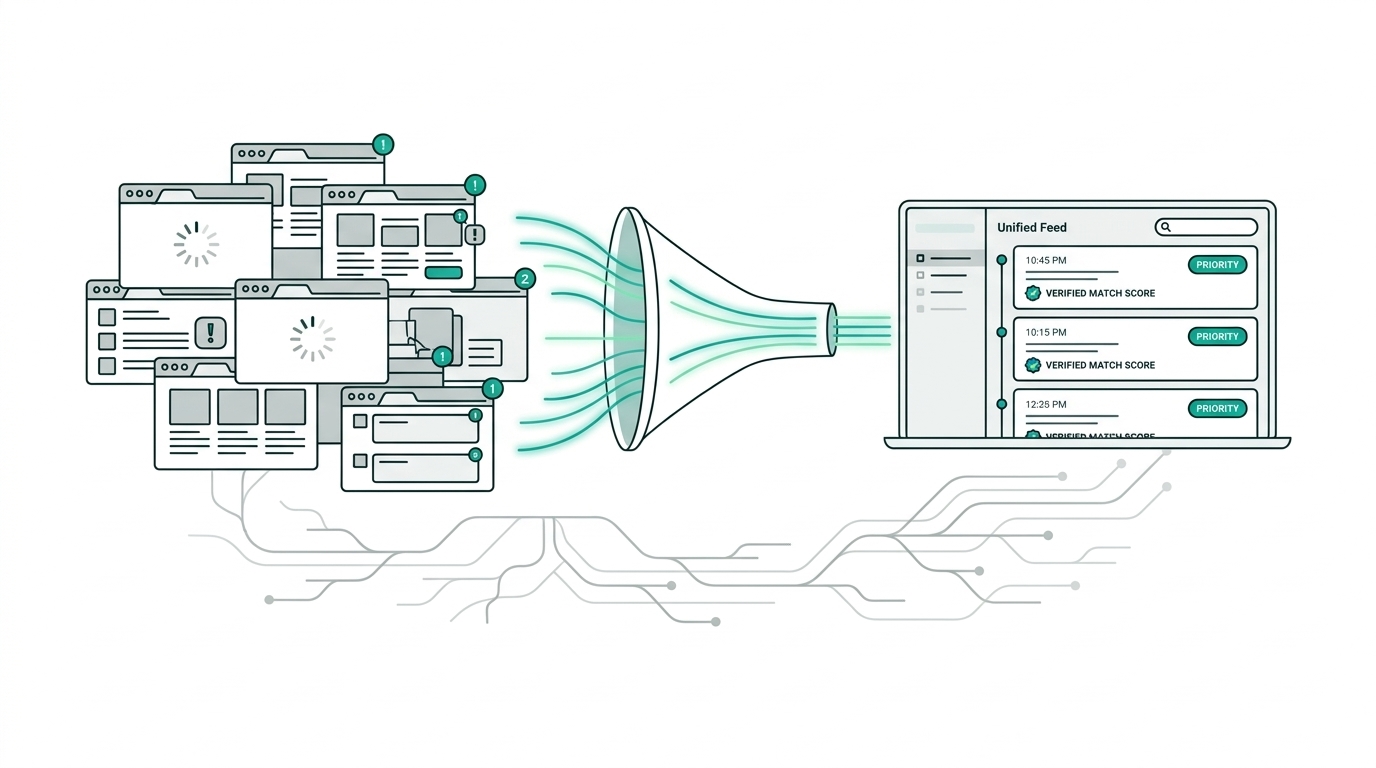
Short answer: Refreshing ten job boards every morning is an inefficient use of time. Consolidating your job search into a single feed allows you to invest the hours saved into tailoring your applications.
Many active job seekers fall into a repetitive routine: opening Indeed, LinkedIn, Wellfound, Otta, YC Work at a Startup, several target company pages, and a couple of Slack channels. They refresh each site, cross-reference against the previous day's results, copy links into a tracking spreadsheet, and repeat the entire cycle tomorrow.
This habit easily consumes two hours a day, five days a week, taking ten hours that could be far better spent tailoring your experience or reaching out to hiring managers directly.
How do you stop refreshing so many job boards?#
Two practical options can help break this cycle:
Option 1: Consolidate into a single feed. Use a platform that centralizes listings from primary sources into one view. For software roles, Fastlyy monitors approximately 1,000 tech career pages directly rather than scraping third-party boards, scoring openings against your resume so you only review relevant, active postings without duplicates.
Option 2: Narrow your focus to three sources. Select the three job boards where your target companies post most reliably, configure daily email digests, and delete any excess bookmarks. This approach requires discipline to avoid opening old tabs, but it significantly reduces context switching.
Both approaches eliminate the cognitive drain of constantly toggling between disparate portals.
Is it better to check many job boards or one aggregator?#
A single high-quality aggregator is preferable, provided it tracks primary upstream sources.
A common pitfall is that many aggregators simply scrape other job boards. Platforms like Indeed, Glassdoor, and ZipRecruiter often mirror overlapping listings with slight delays, meaning you repeatedly encounter the same roles days after they were initially published on the employer's direct portal.
In contrast, tools tracking the applicant tracking system (ATS) portals where requisitions originate deliver immediate notifications without redundancy.
Why does listing duplication hurt your search?#
Redundant job listings create two major disadvantages:
- Lower signal-to-noise ratio: Scrolling through a feed cluttered with repetitive postings drains mental energy, increasing the likelihood that you overlook good opportunities.
- Delayed application timing: When a job appears across multiple secondary boards, it has often been active on the company's direct portal for 24 to 72 hours. That lag often represents the difference between being among the first thirty applicants or joining a backlog of hundreds.
How often should you check for new jobs?#
Reviewing listings twice a day is optimal if you have automated notifications enabled. A morning check allows you to triage overnight openings, while an afternoon check catches midday releases. Checking more frequently without alerts simply creates unnecessary stress without expanding your coverage.
What should you do with the saved time?#
Invest your reclaimed time where it moves the needle most:
- Tailor your primary resume bullets: Revise the top three bullet points of your resume to match the specific requirements in each job description. This takes roughly ten minutes per submission and yields a significantly higher interview conversion rate.
- Initiate targeted professional outreach: Send one personalized note each day to an engineer or engineering manager at a company you admire, referencing a project they built, technical writing they shared, or an opening in their group.
Both habits become feasible once automated feeds handle the discovery phase for you.
The core principle#
If the process of discovering jobs takes more time than tailoring and submitting your applications, your workflow is inverted. Automation should handle discovery so you can dedicate your energy to quality applications.
Fastlyy consolidates 1,000+ tech company career pages into one match-scored feed, so you can spend your time tailoring instead of tab-switching. Start the free trial.
Common Questions Answered
Hiring Telemetry & Distributed Systems Lead
Infrastructure and distributed systems specialist focused on real-time ATS crawler latency, webhook ingestion architecture, and hiring velocity data at Fastlyy.
Stop missing roles before they hit LinkedIn.
Fastlyy monitors the direct career pages of 1,000+ top tech companies in real time. We score every opening against your resume and alert you within ~15 minutes of posting—typically 1 to 3 days before LinkedIn syndication.