


The 2026 AI Engineer Roadmap: Essential Skills, Real Projects, and What Top Labs Look For
A complete practical guide to transitioning from traditional software engineering to AI engineering in 2026. Master LLM architecture, RAG optimization, eval pipelines, agent orchestration, and portfolio proof.
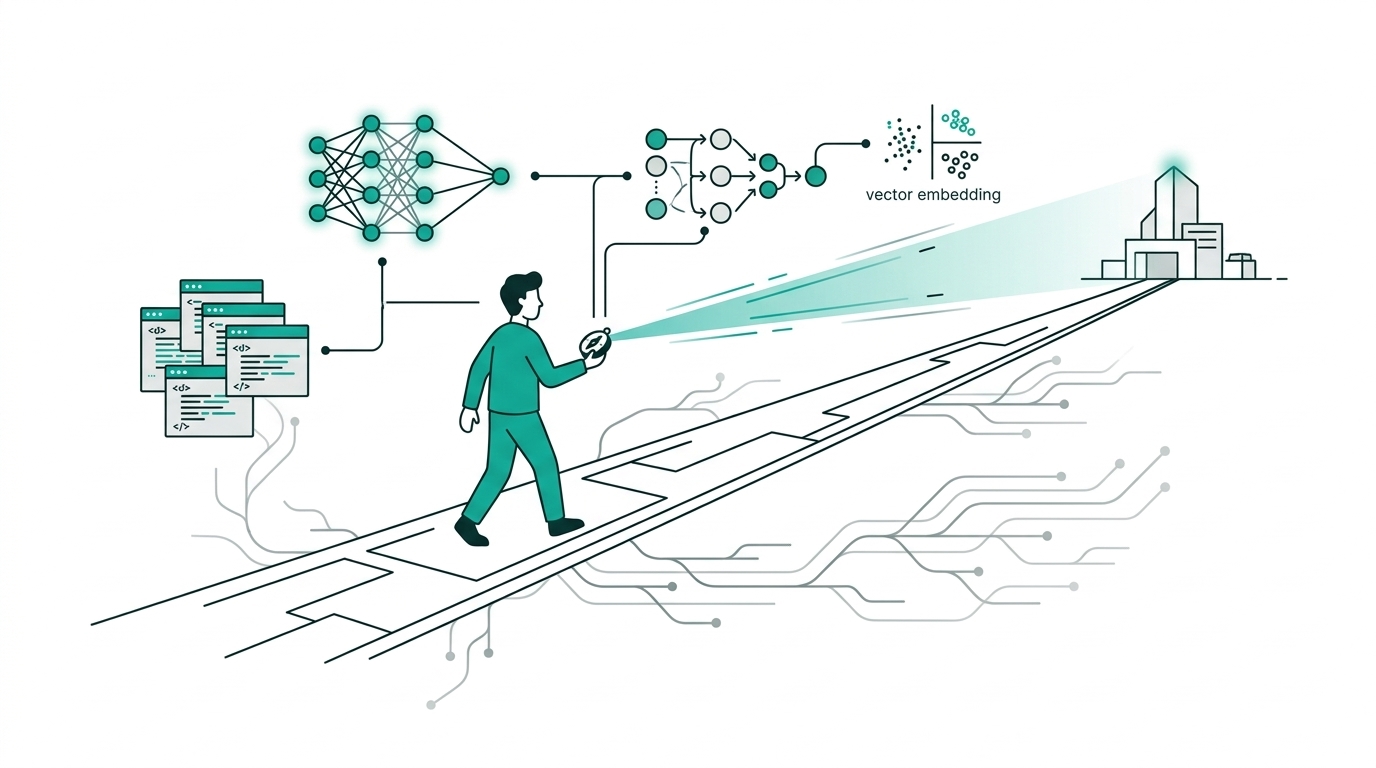
Direct answer: The AI Engineer role in 2026 bridges the gap between foundation model research and production software applications. Rather than training models from scratch, AI Engineers master context engineering, automated evaluations, hybrid retrieval architectures (RAG), and autonomous execution loops. If you are already a competent backend or full-stack software engineer, you can successfully transition into an AI Engineer role in 3 to 6 months by focusing on production systems rather than pure mathematical theory.
Here is the step-by-step roadmap to becoming a highly paid AI Engineer in 2026.
1. The 4 Layers of Modern AI Engineering#
The AI engineering stack has matured into four distinct layers:
┌────────────────────────────────────────────────────────┐
│  Layer 4: Agent Orchestration & Tool Execution         │
│  (State machines, multi-agent coordination, guardrails)│
├────────────────────────────────────────────────────────┤
│  Layer 3: Retrieval & Context (Advanced RAG)          │
│  (pgvector, hybrid search, semantic chunking, re-rank) │
├────────────────────────────────────────────────────────┤
│  Layer 2: Evaluations & Observability                 │
│  (LLM-as-a-judge, regression suites, latency tracing)  │
├────────────────────────────────────────────────────────┤
│  Layer 1: Foundation Models & Inference               │
│  (OpenAI, Anthropic, vLLM, Ollama, HuggingFace, LoRA)  │
└────────────────────────────────────────────────────────┘
2. Core Curriculum: What to Learn in 2026#
Phase 1: Foundation Models & Prompt Engineering#
- Token Economics: Understanding TTFT versus throughput matters, but optimizing Byte-Pair Encoding and context window consumption is what keeps inference bills from spiraling.
- Structured Outputs: Enforce deterministic schemas with Pydantic or Zod.
- System Prompts: Build production-grade guardrails with few-shot exemplars and structured reasoning constraints.
Phase 2: Advanced Retrieval-Augmented Generation (RAG)#
Naive RAG fails in production. Splitting text into arbitrary 500-token chunks and dumping them into a vector database creates hallucinated context and noisy retrievals. High-performing teams require specialized retrieval architectures:
- Semantic Chunking: Splitting by Markdown hierarchy or syntactic boundaries rather than arbitrary character counts.
- Hybrid Search: Combining dense vector embeddings (cosine similarity) with sparse keyword search (BM25) via Reciprocal Rank Fusion (RRF).
- Re-ranking: Running Cross-Encoder models (e.g., Cohere Rerank, BGE-Reranker) on top candidate documents to eliminate hallucinated context.
- Storage Engines: Using PostgreSQL with
pgvectorfor unified operational data, or dedicated engines like Qdrant and Pinecone for billion-scale vectors.
Phase 3: Evaluations & Observability (The #1 Missing Skill)#
Hiring managers repeatedly note that 95% of applicants cannot answer: "How do you know your prompt change didn't break 10% of user queries?"
- Continuous Evaluation: Building golden datasets with unit tests evaluated by deterministic checks and LLM-as-a-judge metrics (Faithfulness, Answer Relevance, Context Precision).
- Tracing & Monitoring: Instrumenting requests with OpenTelemetry, Langfuse, or Arize Phoenix to track latency, token consumption, error rates, and cost per request.
Phase 4: Autonomous Systems & State Machines#
Moving beyond single-turn completion into autonomous multi-step reasoning:
- Tool Use & Function Calling: Giving models bounded API access with rigorous validation.
- Graph-Based Execution: Managing cyclical workflows and rollbacks using state machines (e.g., LangGraph or custom event loops) instead of fragile linear chains.
- Human-in-the-Loop: Designing approval checkpoints for destructive actions (database writes, payments, outbound emails).
3. High-Signal vs Low-Signal Portfolio Projects#
Hiring managers evaluate engineering candidates based on technical execution depth rather than generic API wrappers.
| Low Signal (Will Get Ignored) | High Signal (Secures Interviews) |
|---|---|
| Simple "Chat with your PDF" wrapper | Domain-specific RAG system with automated eval benchmark (showing before/after precision metrics) |
| Basic chatbot calling OpenAI API | Multi-step agent with deterministic tool validation, failure recovery, and state persistence |
| Text summarizer app | Local quantized model (Llama-3/Mistral) served with vLLM, featuring a streaming WebSocket UI |
| Copy-pasted tutorial code | End-to-end open-source library or GitHub CLI tool solving a real developer friction point |
4. How to Position Your Resume for AI Engineering Roles#
When transitioning from general software engineering to AI engineering:
- Highlight Data & Backend Depth: Frame your experience around APIs, asynchronous queues, caching, database query tuning, and streaming architectures. AI apps are distributed software applications first and foremost.
- Quantify AI System Metrics:
- Weak: "Integrated OpenAI API for search feature."
- Strong: "Architected hybrid search pipeline combining BM25 and pgvector with cross-encoder reranking, reducing search hallucination rate by 34% and cutting p95 response latency from 2.1s to 640ms."
- Audit Your Resume: Check whether your resume clearly articulates technical competencies using Roast My Resume before sending out applications.
5. Finding AI Engineer Roles Before the Competition#
Because the AI Engineer title is one of the fastest-growing job titles in the world, roles at top startups (Anthropic, Perplexity, Cursor, Scale AI) often fill within days.
Instead of waiting for postings to appear on aggregators, track career feeds directly. Fastlyy monitors the careers pages of top AI labs and hypergrowth startups every 15 minutes, delivering instant notifications directly to your feed.
Common Questions Answered
International Mobility & Tech Hiring Specialist
Immigration workflow researcher advising international engineering candidates on H-1B lottery strategy, STEM OPT timelines, and cross-border tech hiring.
See how your resume matches top AI Engineer openings.
Upload your resume to Fastlyy. Our AI extracts your core skills and automatically computes match scores against new AI Engineer, Distributed Systems, and Infra roles across 1,000+ tech companies in real time.