


How to Get Hired at Stripe (2026)
Stripe hires more engineers than almost any other private tech company right now, but the bar hasn't dropped. Here is what their process is actually like, and what winning candidates have in common.
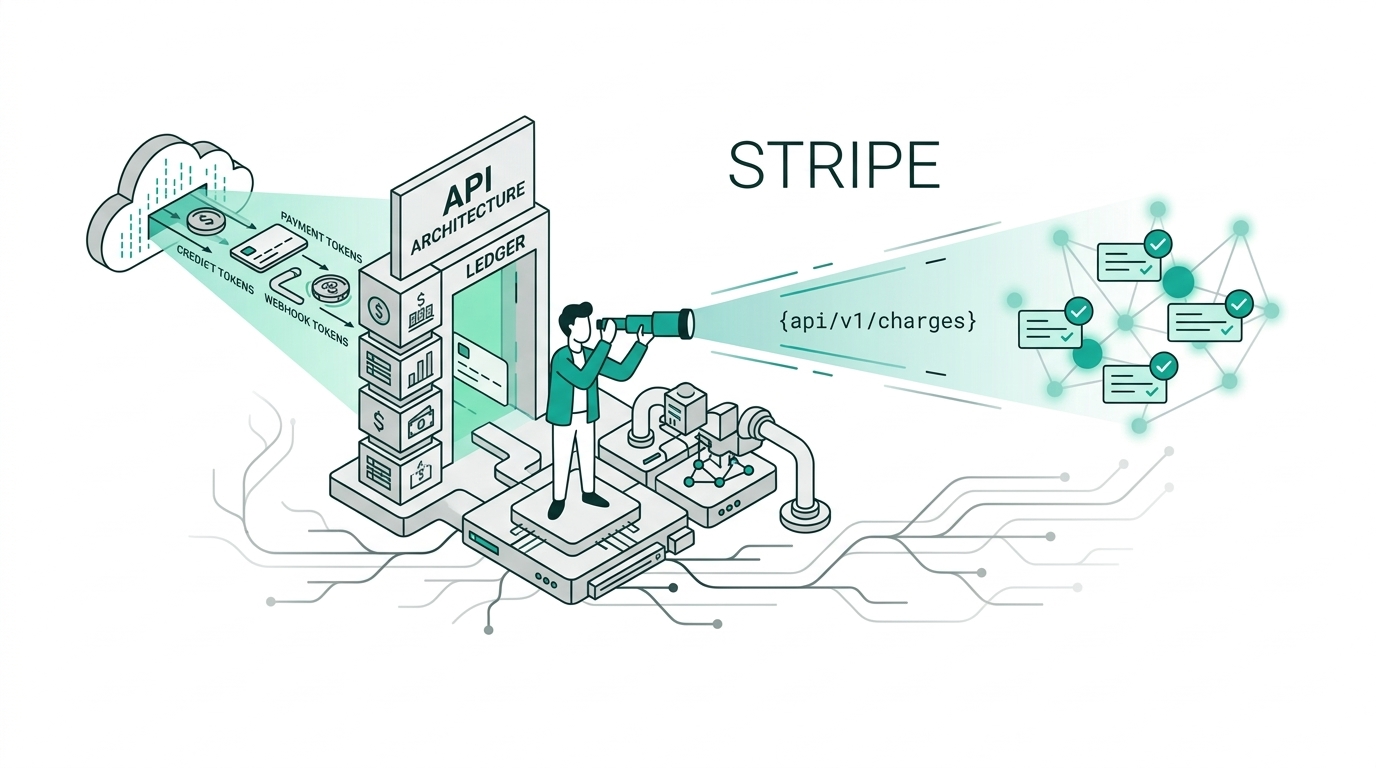
Stripe is one of the largest engineering employers in tech in 2026: roughly 6,000 engineers, continually growing, and shipping product at a pace few companies of its scale can match. That combination makes it a top target for engineers and, predictably, a competitive one.
This is a practical guide to how their hiring actually works, what the bar is per team, and where most strong candidates lose the offer.
What Stripe hires for#
Broadly, four families of engineering:
- Product engineering: The surfaces users see, including Dashboard, Payments UI, Billing, Radar, Terminal, and Atlas.
- Infrastructure & platform: Ruby monolith work, sharding, data infra, developer tooling, security, and observability.
- API & integrations: The public API surface, SDKs, webhooks, and partner integrations.
- Applied ML: Radar (fraud detection), pricing models, forecasting, and LLM-powered product features.
There are also non-engineering tracks (Solutions, Sales Engineering, Design, Product) that hire actively; the bar and process differ significantly across functions.
What the bar actually is#
Based on conversations with Stripe engineers and candidates who completed the loop:
They weight, in roughly this order:
- Judgment. Stripe's Q&A-style behavioral round is rigorous: interviewers will analyze a project you led for 45 minutes. If your answers lack substance, you won't advance. They specifically want to understand the trade-offs you evaluated and the paths you consciously rejected.
- Code quality, not code speed. Coding rounds emphasize realistic problems in your language of choice within a real IDE. Clean, well-structured architecture matters more than solving the problem in record time.
- Written communication. Stripe is famously document-centric internally. If a recruiter requests a written project retrospective, treat it with the same care you would give production code.
- Ownership. Interviewers routinely ask about instances where you identified a system failure and resolved it proactively without explicit direction.
What the process looks like#
The standard interview process typically involves:
- Application / referral review. Stripe's careers page uses Greenhouse; referrals flow through an internal portal. Response time averages 1–2 weeks, with significant filtering at this stage.
- Recruiter phone screen. A 30-minute conversation covering background, compensation alignment, and your specific interest in Stripe.
- Hiring manager conversation. A 45–60 minute deep dive into your recent engineering projects: what shipped and what you'd do differently.
- Technical loop. Usually 4 rounds:
- Coding (typically 2 sessions): Pragmatic, practical problem-solving in a standard IDE.
- System design (for mid-senior levels and above): Realistic architecture sessions focused on features and scale.
- Debugging / bug hunt session for infrastructure roles.
- Behavioral / values round. A 45-minute focused discussion on how you handle disagreement and ambiguity, and whether you take long-term ownership.
- Team match + offer. Finalized once you pass the loop, paired with conversations about team placement and compensation.
Total elapsed time generally spans 4 to 6 weeks.
The things that get people advanced#
Master their public documentation. Stripe's documentation is industry-leading. Read several key API guides thoroughly to speak knowledgeably about how their public interfaces are structured and where trade-offs exist.
Bring a real API integration you've built. Demonstrating hands-on familiarity through a side project using Stripe Checkout or an event webhook handler shows genuine interest in the product.
Show technical pragmatism regarding language choices. Stripe relies heavily on Ruby alongside services in Go and Java. Having thoughtful, balanced opinions about ecosystem trade-offs demonstrates senior perspective.
Structure written retrospectives clearly. If requested, format project summaries like internal promotion documents: define the core challenge, the architecture shipped, the measurable results, and what you would refine in hindsight.
Common reasons applications get rejected#
- Submitting an uncustomized resume. Generalist resumes that fail to highlight skills matching the specific team's requirements are quickly filtered out.
- Overengineering during coding rounds. Introducing unnecessary abstractions or complex patterns for a straightforward 30-minute problem is a notable red flag at Stripe. Readable, clean code wins.
- Superficial answers to "Why Stripe?" Generic praise ("I love your products") carries little weight compared to concrete observations about specific APIs or infrastructure challenges.
- Vague behavioral responses. Unsupported claims like "we reduced latency" fail to impress; detailed explanations quantifying improvements and trade-offs succeed.
- Applying late in the cycle. Requisitions for high-demand teams fill rapidly, making early application submission critical.
Practical steps for this week#
- Select a target team. Tailor your preparation to a specific team's domain rather than the company as a whole.
- Review documentation for that surface area. Focus on the APIs, guides, and quotas relevant to that group.
- Implement a functional integration with their API. Building a concise working demo provides practical credibility during interviews.
- Refine your resume bullets. Ensure achievements highlight concrete numbers and clear ownership scope.
- Enable real-time careers page alerts. Use Fastlyy to monitor
stripe.com/jobsautomatically.
What earns the offer#
Offers at Stripe typically depend on a twofold evaluation:
- Technical competence: Demonstrating clean execution during coding sessions and pragmatic trade-off analysis during system design.
- Professional judgment: Showing collaborative maturity and problem-solving resilience during behavioral and values discussions.
Demonstrating both qualities consistently throughout the interview loop is what turns applications into offers.
Want alerts the moment matching roles open at Stripe (or 1,000+ other tech companies)? Try Fastlyy free for 3 days.
Principal Engineering Career Advisor
Ex-FAANG hiring committee member and career mentor helping software engineers navigate technical interview bars, leveling calibrations, and offer comparisons.
Want alerts the minute Stripe posts a new engineering role?
Engineering requisitions at Stripe hit applicant caps within 48 hours. Fastlyy monitors their direct career pages every 15 minutes, alerting you 1 to 3 days before the role syndicates to LinkedIn.